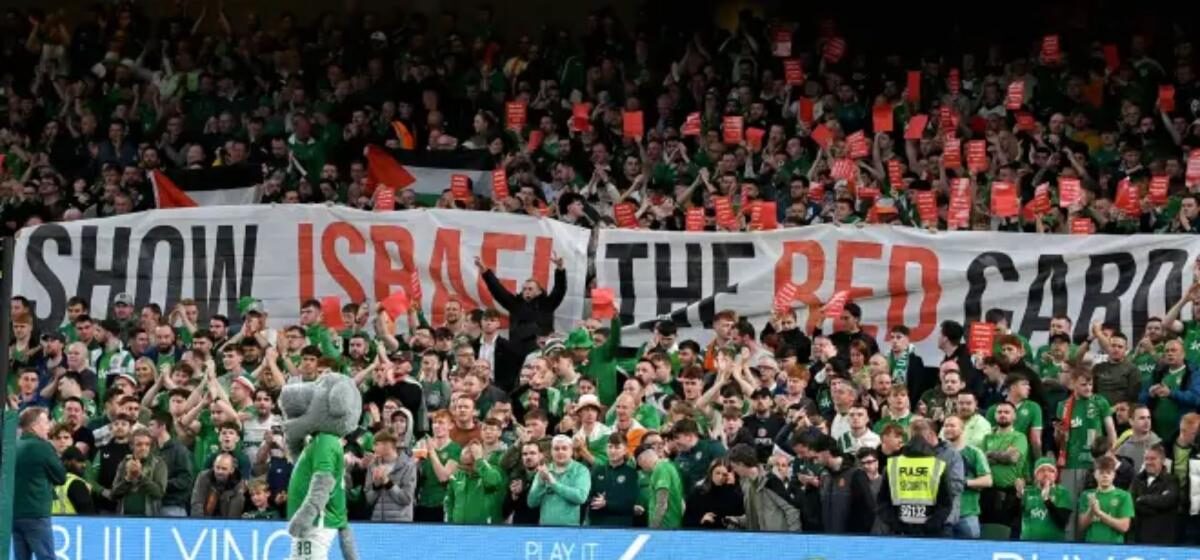
Ireland will play their fixture against Israel in Debrecen, Hungary, on September 27, despite calls for a boycott from their own compatriots. The match is one of three group games for Ireland, with Austria and Kosovo completing the group. The team is managed by the Icelander Heimir Hallgrimsson, who has defended the decision to take the field.
“None of us feels comfortable playing, but once we have decided to play it, we stick together and play as one,” Hallgrimsson said, before adding a remark that drew an immediate response from the other side: “We are not playing with a genocide, we are playing against a genocide. We are playing against Israel, we are not playing with Israel.”
The Israel Football Association answered with a statement on its Twitter account, invoking the country’s record in science and beyond before turning on the Ireland coach. “We have contributed to the world and to humanity in countless fields, winning an impressive number of Nobel Prizes along the way. Unfortunately, we have still not found a cure for the stupidity, ignorance, and hypocrisy displayed by the coach of the Ireland team,” it said. “We are not playing with ignorance, hypocrisy, and stupidity, we are playing against the coach who embodies them.”
The fixture is the latest point of friction around a stance Ireland has carried into several sports. Ireland is one of the countries most critical of the genocide in Gaza and, historically, one of the most committed to the Palestinian cause, and it will maintain its Eurovision boycott for a second consecutive year. There has already been tension elsewhere: in February 2024, the women’s national basketball teams of Ireland and Israel met in a qualifying match for the 2025 EuroBasket, where the Irish players listened to Israel’s anthem next to their own bench rather than on the court opposite their rivals. There was no exchange of gifts, and the players also did not shake hands before the opening tip.
Opposition to the football fixture has been organised around a letter signed by more than 160 Irish athletes, among them Olympians, former national team footballers, former rugby players and boxers. The signatories point out that the Irish football federation could have taken action earlier, but stress that it is still possible to act in order to show that sport is there to bring people together. “Not playing this match would be the sportiest thing to do. It is a very important moment and an opportunity to do the right thing,” they emphasise. “Putting on the Ireland jersey and representing your country means a lot, but the Ireland we want to represent is one that remembers its anti-colonialist roots and anti-imperialist resistance.”
“This moment,” they add, “symbolizes something very profound, greater than sport. But this is also sport. This would demonstrate the true power of sport to unite people, remind us of the values that connect us all, and show the impact beyond the match.”